


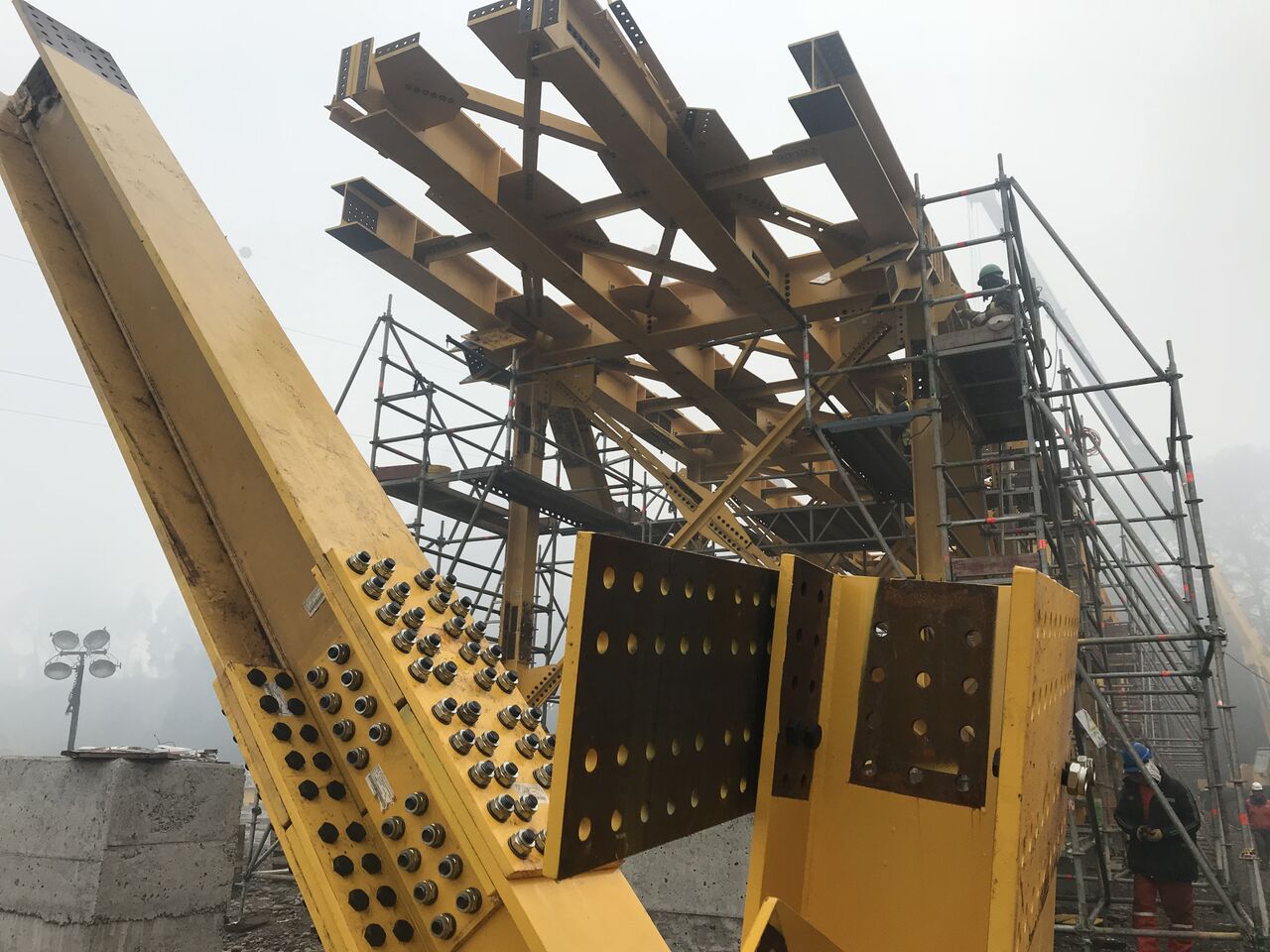
Rebuilding a Collapsed Railway Bridge with the ESL Locknut
When a major railway bridge collapsed under heavy freight traffic, the failure wasn’t visible bolt loosening—it was silent clamp force loss.
Improving Structural Bridge Stability and Safety
The Challenge: A Critical Railway Crossing Under Extreme Load
A 450-meter steel railway bridge spanning a major South American river was a vital freight corridor, carrying heavy trains transporting agricultural and chemical products. The structure was assembled using swage collar bolt and nut systems and subjected to continuous high tonnage.
Although the bolted joints were routinely inspected and no loosened fasteners were detected, the bridge operated under constant stress from repeated load cycling.
Undetected Clamp Force Loss Leads to Catastrophic Failure
While a 700-meter-long freight train was crossing the bridge, the structure collapsed. Six tanker cars fell into the river, compromising water quality and halting rail traffic.
A post-incident investigation conducted by a private engineering firm in coordination with government agencies revealed a critical issue:
the swage collar fastener assemblies had not loosened or separated—but they had lost clamp force.
This loss went undetected during inspections. Over time, insufficient clamp force allowed bolt holes to elongate, introducing cyclical fatigue into the structure. The accumulated damage ultimately caused bolt shear and sudden structural failure.
The failure mechanism was not visible loosening.
It was unverifiable fastener performance.
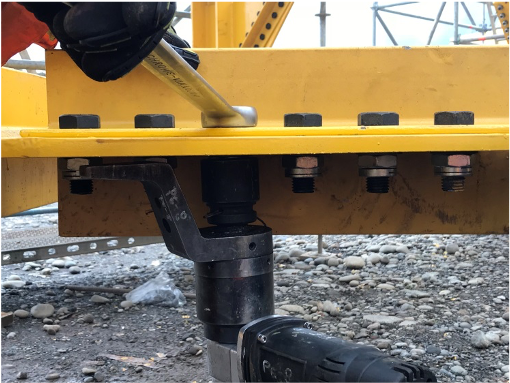
Defining a Practical Objective & Installation of the ESL Locknut
Engineers rebuilding the bridge needed a fastening solution that combined proven structural bolting with self-locking performance—while allowing inspectors to verify torque retention in service and reapply torque using standard tools.
After a year-long evaluation, engineers selected specially dimensioned J.Lanfranco ESL self-locking locknuts to assemble the new bridge.
More than 180,000 ESL locknuts were installed in sizes:
- 7/8”
- 1”
- 1-1/8”
The nuts were paired with ASTM A325 structural bolts and ASTM F436 hardened washers. Standard installation tools and procedures were used, allowing inspectors to monitor clamp force throughout the life of the structure.
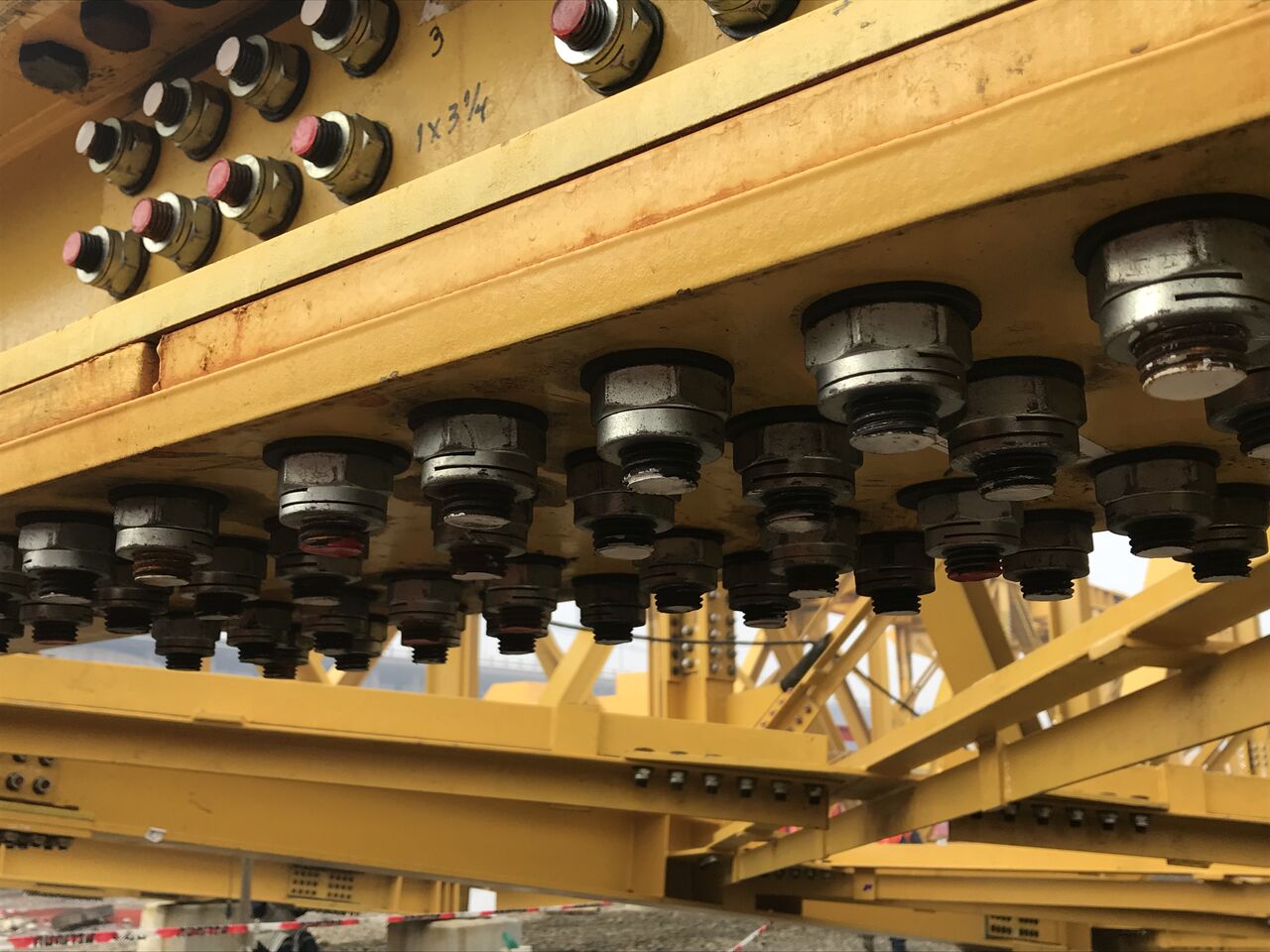
Clamp Force You Can Verify—Long After Installation
The reconstructed bridge is now in service, secured with fasteners that maintain clamp force under heavy cyclic loading while remaining fully inspectable.
Unlike the previous fastening system, ESL locknuts allow inspectors to confirm torque retention and reapply torque when required—eliminating hidden clamp force loss as a failure mode.
Why Use the ESL Locknut?