


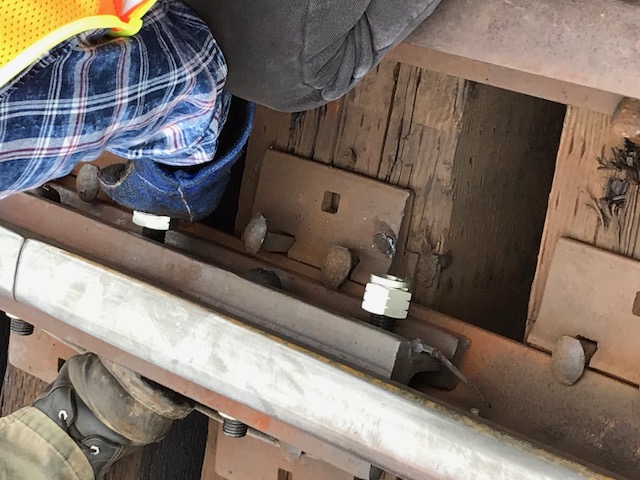
J.Lanfranco Locknut Installation
Recognized in the industry as the world’s best locknut, the J. Lanfranco design combines an all-metal, reusable design with dual self-locking slots that prevent thread damage and deliver consistent torque independent of bolt tension.
How to Install J.Lanfranco Dual-Slotted Locknuts
Watch the Installation Process
The above video shows how J.Lanfranco dual-slotted locknuts are installed in real-world conditions—using standard bolts, standard tools, and standard torque procedures. No special training. No proprietary steps.
Designed for Simple, Repeatable Installation
Unlike two-piece locking systems or fasteners that rely on thread deformation, J.Lanfranco locknuts install just like a conventional nut. The self-locking function is built into the nut geometry.
There is no need for:
- Secondary locking elements
- Lubricants or anti-seize compounds
- Specialized tooling or procedures
This minimizes installation variability and reduces the risk of human error.
Key Functional Mechanics:
- Thread Engagement: Bolt threads expand the locking slots located in the turret section of the nut.
- Load Distribution: Locking slots grip the thread flanks precisely where designed to carry the load.
- Even Torque Application: Locking torque is applied over two planes on opposite sides of the nut.
- Low Preload Operation: Locking is effective even with minimal or no bolt tension.
- Vibration and Shock Resistance: The design prevents loosening under vibration, shock, or repeated impact.
What Installers Will Notice
- Smooth, predictable torque application
- No galling or thread damage, even in stainless steel
- Consistent feel from installation to installation
- Locking remains effective even in low-preload applications
The locking action does not rely on excessive friction or thread damage, which means the nut can be installed and removed without compromising the bolt.